Best AI Image Generators in 2026: The Definitive Guide
The AI image generation landscape in 2026 looks nothing like it did a year ago. Models that could barely render readable text now produce publication-ready typography. Photorealism has crossed the uncanny valley. And the price of generating a production-quality image has dropped by an order of magnitude.
But with more than a dozen serious contenders on the market, choosing the right tool for your team is harder than ever. We spent weeks testing the eight best AI image generators across real production scenarios — product photography, editorial illustration, brand design, social media content, and technical diagrams — to find out which ones actually deliver.
Here's what we found.
The 8 Best AI Image Generators, Ranked

Before we dive into each model, here's the big picture. These rankings reflect overall production value — not just raw image quality, but prompt adherence, speed, consistency, text rendering, and how well each tool fits into real creative workflows.
| Rank | Model | Best For | Speed |
|---|---|---|---|
| 1 | Nano Banana Pro | Photorealism, product photography, text | ~5s |
| 2 | GPT Image 1.5 | Text rendering, editing, iteration | ~15s |
| 3 | Flux 2 Pro | Color precision, multi-reference | <5s |
| 4 | Midjourney v7 | Artistic quality, aesthetics | ~10s |
| 5 | Ideogram 3.0 | Typography, graphic design | ~8s |
| 6 | Recraft v3 | Vector/SVG, brand design | ~6s |
| 7 | Imagen 4 | Speed, high-volume production | ~3s |
| 8 | Seedream 5.0 Lite | Visual reasoning, web data | ~3s |
"The real differentiator in 2026 isn't quality — every model here produces impressive images. It's workflow fit."
1. Nano Banana Pro — The Community Favorite

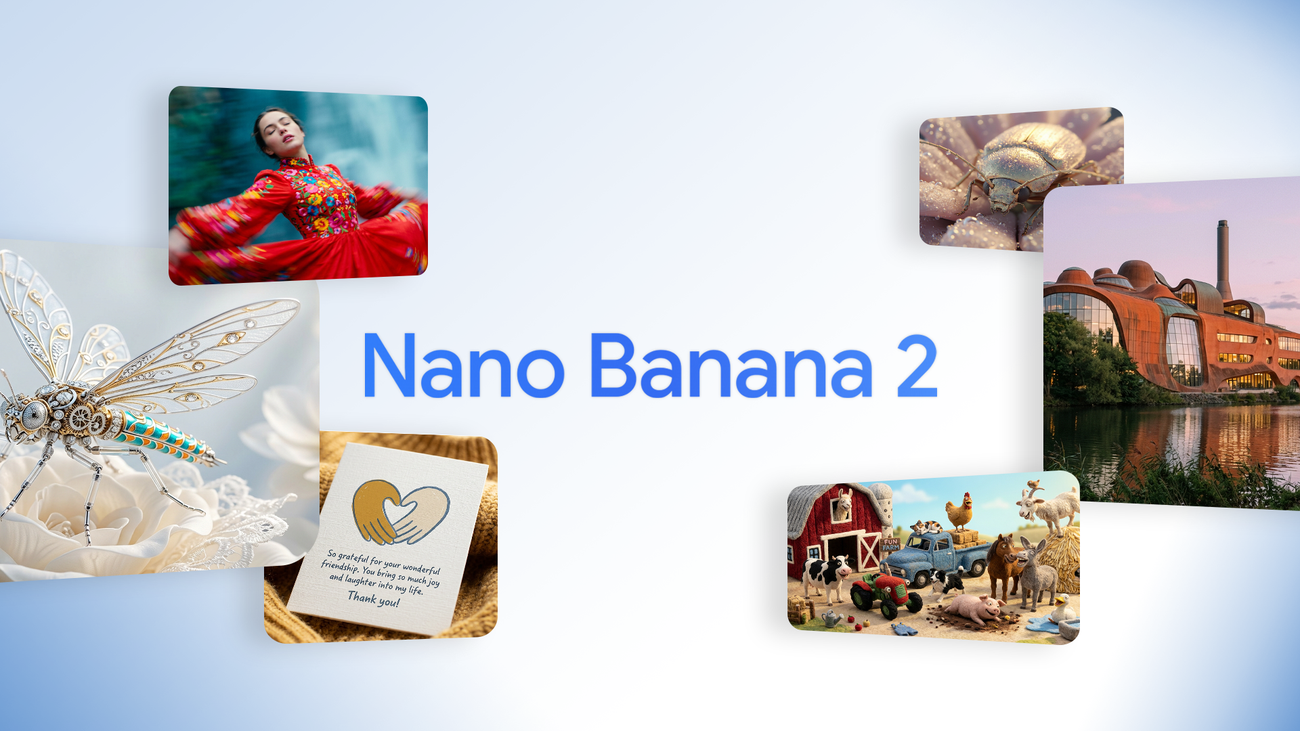
Google's Nano Banana Pro — powered by Gemini 3 Pro — broke LM Arena records with over 2.5 million community votes and the largest ELO score lead in the platform's history (171 points above the next competitor at the time of its benchmark run). It's not just fast. It understands physics, materials, and lighting at a level that makes product photography and editorial content indistinguishable from a professional shoot.
What sets it apart:
- Record-breaking LM Arena ELO — largest lead in Arena history, backed by 5M+ community votes
- 4K native resolution with photorealism that handles glass, metal, skin, and water with physics-engine precision
- 95% text accuracy for strings under 10 words — competitive with the best text renderers
- Advanced editing — change camera angles, focus, lighting, and perspective on existing images
- Free tier available via the Gemini chat app (with watermark)
Where it falls short:
- Watermarked on free tier — Pro requires Google AI Studio payment
- Less granular creative control than Midjourney's style system
- Locked into Google's ecosystem for API access
Nano Banana Pro excels at product photography. Its physics understanding makes materials look genuinely real — test it with glass bottles, metallic surfaces, or fabric textures and compare against a real photo.
2. GPT Image 1.5 — The Text Rendering King
GPT Image 1.5 scored 1,264 ELO on LM Arena, placing it at or near the top of the leaderboard. But its real advantage is what it does with text. This is the first model where you can confidently generate text-heavy graphics: infographics, social media quotes, product labels, UI mockups. The text actually reads correctly.
What sets it apart:
- Text rendering accuracy that's production-ready — full sentences, small type, multi-line paragraphs
- Precision editing — change one element while preserving lighting, composition, and identity
- 4x faster than DALL-E 3, with typical generation in 10-30 seconds
- Multimodal understanding — upload an image and edit with natural language instructions
Where it falls short:
- Pricier than most competitors per generation
- Artistic style range isn't as deep as Midjourney
- Requires ChatGPT Plus or API access
GPT Image 1.5 excels at iterative workflows. Start with a rough concept, then refine with targeted edits — the model preserves context between rounds better than any competitor.
3. Flux 2 Pro — The Photographer's Choice
Black Forest Labs built Flux 2 Pro as a 32-billion parameter model with a focus that matters: camera-accurate visual characteristics. Depth of field, lens distortion, chromatic aberration, film grain — it doesn't simulate these effects, it reproduces them with optical precision.
What sets it apart:
- Hex color precision — specify #FF6B35 and get exactly that color, no drift
- Multi-reference mode — feed up to 10 reference images for consistent characters, products, and styles
- Sub-second generation at production quality
- Latent flow matching architecture — faster and more prompt-adherent than traditional diffusion
Where it falls short:
- Text rendering is decent but not GPT Image-level
- Artistic/painterly styles aren't its strength
- The open-source dev version is significantly less capable than Pro

4. Midjourney v7 — Still the Aesthetic King
Midjourney v7 has been the default model since June 2025, and for good reason: no other generator matches its instinctive sense of visual composition. The images look intentional in a way that's hard to quantify but immediately obvious.
What sets it apart:
- Unmatched aesthetic quality — composition, color harmony, and visual storytelling
- Model personalization built in from the start — it learns your style preferences
- Draft mode at half cost and 10x speed for rapid exploration
- Style reference (sref) system for maintaining visual consistency across projects
- 20-30% faster than v6, especially for complex multi-character scenes
Where it falls short:
- No API (Discord or web only) — harder to integrate into automated pipelines
- Text rendering has improved but still lags behind GPT Image and Ideogram
- Less precise control over specific visual elements compared to Flux 2
5. Ideogram 3.0 — The Typography Specialist
If your work involves text inside images — posters, social graphics, branded content — Ideogram 3.0 deserves serious attention. Its 90-95% text rendering accuracy was unthinkable just a year ago, and it handles complex, multi-line compositions that make other models choke.
What sets it apart:
- 90-95% text accuracy on complex typography, including stylized and cursive text
- Style references — upload up to 3 images to guide aesthetics without verbose prompting
- Magic Fill and Extend — inpainting and outpainting built into Ideogram Canvas
- 4.3 billion style presets powering the style reference system
- Consistently tops ELO rankings in human preference evaluations for design-focused tasks
Where it falls short:
- Photorealism is competent but not class-leading
- Smaller community and ecosystem than Midjourney
- Limited API access compared to Flux or GPT Image
6. Recraft v3 — Built for Designers

Recraft v3 is the only model on this list that thinks in design language. While other generators output raster images, Recraft produces native SVG vector files that actually work in Illustrator, Figma, and professional design tools. For brand teams managing visual identity across dozens of touchpoints, that's transformative.
What sets it apart:
- Native SVG/vector generation — scalable output that works in professional design tools
- Long-form text rendering — full paragraphs, not just headlines
- Brand consistency tools — save custom styles, brand colors, and visual guidelines
- Precise text positioning — specify exact placement and sizes within the image
- Held #1 on industry benchmarks for five consecutive months
Where it falls short:
- Inconsistent dimension controls in some workflows
- Mobile experience needs polish
- Higher price point ($20/month minimum) than some alternatives
"Recraft v3 is the first AI image tool that doesn't require a designer to clean up the output. It already thinks like one."
7. Imagen 4 — Google's Speed Demon
Google's Imagen 4 won't top every benchmark, but it might be the most practical choice for high-volume production. With generation speeds up to 10x faster than its predecessor and native 2K resolution, it's built for teams that need quantity and quality.

What sets it apart:
- Blazing speed — Imagen 4 Fast generates in under 3 seconds
- Three-tier model family — Fast ($0.02/image), standard, and Ultra for maximum fidelity
- 2K native resolution across all tiers
- SynthID watermarking — invisible AI provenance built in
- Diverse art style accuracy — from photorealism to impressionism to illustration
Where it falls short:
- Locked into Google's ecosystem (Vertex AI, Gemini API)
- Creative control is less granular than Midjourney or Flux
- Text rendering improved but still behind the top three
8. Seedream 5.0 Lite — The Thinker
ByteDance's Seedream 5.0 Lite is the most intellectually interesting model on this list. It doesn't just generate images — it reasons about visual problems using a chain-of-thought process. Show it scattered puzzle pieces and it figures out the assembled object. Give it a Go board and it infers the next move.
What sets it apart:
- Multi-step visual reasoning — understands spatial relationships and physical laws
- Real-time web search — generates images incorporating live data (weather, stock prices, trending topics)
- Native 2K/4K output at 2-3 seconds per image
- Deep world knowledge — accurate scientific visualization, cultural context, information design
- Vague instruction support — understands intent from minimal descriptions
Where it falls short:
- Newer model with a smaller user community
- Not yet widely available through third-party platforms
- Aesthetic polish doesn't match Midjourney for artistic use cases
How to Choose the Right Model for Your Team
The best AI image generator depends on what you're actually making:
- Product photography and e-commerce: Nano Banana Pro — physics-accurate materials and lighting are unmatched
- Marketing and social media teams: GPT Image 1.5 or Ideogram 3.0 — you need reliable text and fast iteration
- Color-critical brand work: Flux 2 Pro — hex color precision and multi-reference consistency
- Brand designers and agencies: Recraft v3 — native vector output eliminates the raster-to-vector conversion step
- Editorial and creative direction: Midjourney v7 — nothing else matches the aesthetic intuition
- High-volume content production: Imagen 4 Fast — speed and cost at scale
- Data-driven content and infographics: Seedream 5.0 Lite — real-time web data integration is unique
You don't have to choose just one. Platforms like XainFlow give you access to multiple models — Flux 2, Recraft v3, GPT Image, Seedream, Imagen, and more — through a single workspace, so you can match the right model to each task without juggling subscriptions.
The Bottom Line
The AI image generation market in 2026 has matured past the "wow factor" phase. Every model on this list can produce impressive images. The question isn't which model makes the prettiest pictures — it's which model fits your production workflow.
Nano Banana Pro leads overall for its photorealism and community-validated quality. GPT Image 1.5 is the best choice when text accuracy matters most. And Midjourney's aesthetics, Recraft's vector output, and Flux 2's color precision each win decisively in their respective domains.
The smartest approach for creative teams in 2026 isn't picking one model — it's having access to all of them and knowing when to use each.
Frequently Asked Questions
What is the best AI image generator in 2026?
Based on our testing across real production scenarios, the top AI image generators in 2026 are Nano Banana Pro (best overall quality), GPT Image 1.5 (best text rendering), Midjourney v7 (best artistic style), and Flux 2 (best value). The best choice depends on your specific use case — product photography, editorial illustration, or brand design.
How much do AI image generators cost in 2026?
Prices vary widely. Free options include Flux Dev and limited tiers of most platforms. Paid plans range from $10/month (basic) to $60+/month (professional). Platforms like XainFlow offer multi-model access starting at $24/month with 15,000 credits, giving access to Flux, Ideogram, Recraft, and more from a single subscription.
What AI image generator has the best photorealism?
In 2026, Nano Banana Pro and GPT Image 1.5 lead in photorealism. Nano Banana Pro excels at natural scenes and product photography, while GPT Image 1.5 is stronger for portraits and text-heavy compositions. Flux 2 Pro offers competitive photorealism at a lower price point.
Can AI image generators create text in images?
Yes, text rendering has improved dramatically in 2026. GPT Image 1.5 leads with near-perfect typography. Ideogram 3.0 and Flux 2 Pro also handle text well. Nano Banana Pro and Midjourney v7 have improved but still struggle with complex typography.
What is the best free AI image generator?
The best free AI image generators in 2026 are Flux Dev (open-source, runs locally), Google's Imagen 3 (via AI Studio), and the free tiers of platforms like XainFlow (800 credits/month). For professional use, paid options offer significantly better quality and consistency.